
Dehumidifiers are useful devices that lower the humidity in rooms and can thus prevent mold growth. Here are some typical uses for dehumidifiers:
A dehumidifier for the home can be worthwhile in various situations, depending on individual circumstances and needs. Here are some scenarios in which purchasing a dehumidifier might prove beneficial:
High humidity indoors
If the humidity in your rooms is consistently above 60%, there is an increased risk of mold growth. In such cases, a dehumidifier can help reduce the humidity to a healthy level and thus prevent mold.
Tip: Regularly measure the humidity with a hygrometer. If it consistently exceeds 60%, you should consider a dehumidifier.
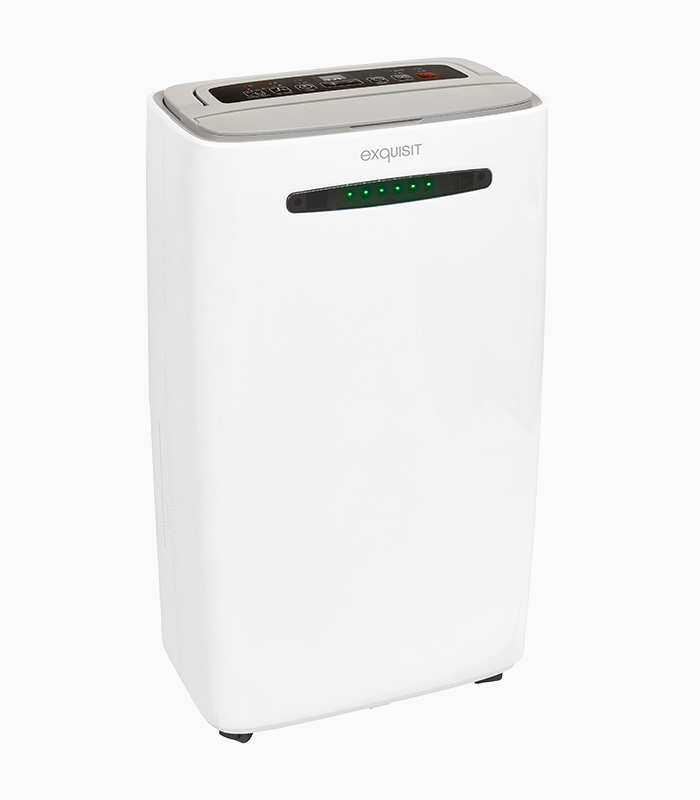
Tip: For optimal effectiveness, place the dehumidifier centrally in the room or near the main source of moisture.
If the humidity in your rooms is consistently above 60%, there is an increased risk of mold growth.In such cases, a dehumidifier can help reduce the humidity to a healthy level and thus prevent mold.
Tip: Regularly measure the humidity with a hygrometer. If it consistently exceeds 60%, you should consider a dehumidifier.
Tip: For optimal effectiveness, place the dehumidifier centrally in the room or near the main source of moisture.
When drying after water damage, dehumidifiers are indispensable for quickly removing moisture and minimizing consequential damage1.
If you or your family members suffer from allergies or respiratory problems that are aggravated by mold or high humidity, a dehumidifier can improve the indoor climate.
A dehumidifier is particularly worthwhile if you're constantly struggling with humidity problems that can't be solved by regular ventilation. The investment can pay off in the long run by preventing mold growth, improving the indoor climate, and minimizing potential health risks and structural damage.
However, keep in mind that a dehumidifier is not a substitute for good ventilation. Combine its use with regular ventilation for optimal results.

About the author:
Hello, I'm Hannah, air and climate expert at Exquisit. My blog posts are all about the right temperature and fresh air.



content reCAPTCHA to submit the form. Please note that this involves exchanging data with third-party providers.
More informationYou are currently viewing placeholder content from Turnstile. To access the actual content, click the button below. Please note that this will involve sharing data with third parties.
More informationYou are currently viewing placeholder content from Vimeo. To access the actual content, click the button below. Please note that this will involve sharing data with third parties.
More informationYou are currently viewing placeholder content from YouTube. To access the actual content, click the button below. Please note that this will involve sharing data with third parties.
More informationcontent reCAPTCHA to submit the form. Please note that this involves exchanging data with third-party providers.
More informationYou are currently viewing placeholder content from Klaviyo. To access the actual content, click the button below. Please note that this will involve sharing data with third parties.
More information