
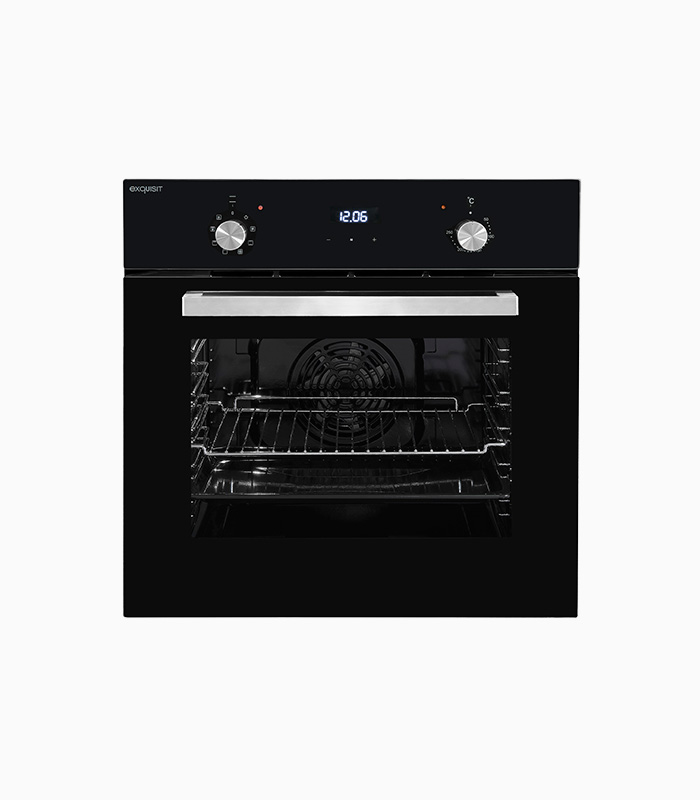
Who hasn't been there? You're standing in the kitchen, your stomach is rumbling, and you'd love to start baking or roasting right away. But then you read in many recipes: "Preheat oven to 180°C." Is that really necessary, or can you simply skip this step? We'll explain when preheating makes sense and when you can confidently do without it.
Preheating the oven has a simple purpose: it ensures a consistent temperature from the start. This results in more even cooking and better baking outcomes. Especially with delicate recipes like cakes or soufflés, this can make the difference between success and failure.
✔️ For baked goods : Cakes, bread and pastries need the right temperature from the start to rise optimally and form a crispy crust.
✔️ For crispy meat : If you want to prepare a juicy steak or crispy chicken drumsticks, preheating is a must. The high initial temperature ensures a quick crust that seals in the meat juices.
✔️ For pizza : A well-preheated oven is essential for a crispy pizza. Ideally, you should even use a pizza stone, which you preheat along with the oven.
✔️ For delicate dishes : Soufflés, macarons, and other fine pastries are sensitive to temperature fluctuations. Preheating is especially important here.
✖️ For casseroles : Casseroles and gratins can easily be placed in a cold oven. They cook slowly and evenly, even if the temperature only rises gradually.
✖️ For braised dishes : Goulash, ragout, or other braised dishes require long cooking times at low temperatures. Preheating is not necessary here.
✖️ When roasting : Large pieces of meat, such as a pork roast or a goose, can also be placed in a cold oven. They require a long cooking time anyway, during which the temperature can distribute evenly.
Preheating isn't always necessary, but it can make all the difference for many dishes. Follow the recommendations in your recipes and feel free to experiment a little. Over time, you'll develop a sense of when preheating is beneficial and when you can confidently skip it. This way, your dishes will turn out perfectly, and you'll save energy at the same time.

My additional tip:
"Use your oven's convection setting to save energy and reduce baking time. Convection distributes heat evenly throughout the oven, allowing you to lower the temperature by about 20–30 °C without affecting the baking result. This is particularly efficient if you want to bake several dishes at the same time."






reCAPTCHA content to submit the form. Please note that this involves exchanging data with third-party providers.
More informationYou are currently viewing placeholder content from Turnstile . To access the actual content, click the button below. Please note that this will involve sharing data with third parties.
More informationYou are currently viewing placeholder content from Vimeo . To access the actual content, click the button below. Please note that this will involve sharing data with third parties.
More informationYou are currently viewing placeholder content from YouTube . To access the actual content, click the button below. Please note that this will involve sharing data with third parties.
More informationreCAPTCHA content to submit the form. Please note that this involves exchanging data with third-party providers.
More informationYou are currently viewing placeholder content from Klaviyo . To access the actual content, click the button below. Please note that this will involve sharing data with third parties.
More information